

Original Broadcast Date: 7/19/2026
Sponsored by MaximusFederal agencies continue expanding artificial intelligence while modernizing technology and strengthening cybersecurity across mission operations. This episode of Fed Gov Today features leaders from the U.S. Secret Service, Maximus, and the Department of Energy discussing how organizations evaluate AI, improve legacy systems, and scale enterprise technology.
Chris Kraft, Chief Information Officer at the U.S. Secret Service, explains how the agency is recruiting AI experts to support protection, investigations, and enterprise operations. He describes an approach centered on piloting use cases, quickly evaluating results, collaborating with mission partners, and focusing on technologies that improve operational effectiveness. Kraft also discusses workforce development, mobile technology modernization, and the importance of training employees to fully use existing capabilities.
Kynan Carver, Vice President of Cybersecurity at Maximus, examines the cybersecurity challenges facing critical infrastructure providers as organizations balance aging operational technology with modernization efforts. He explains why zero trust frameworks, AI-enabled threat detection, and stronger security practices can help organizations identify vulnerabilities earlier and reduce risk across interconnected systems.
Bridget Carper Arnone, Deputy Chief Information Officer for Architecture, Engineering, Technology, and Innovation and Acting Chief Data Officer at the Department of Energy, shares how the department's enterprise AI tools continue to expand. She discusses Joulix reaching 20,000 users across 88 organizations, the development of Quanta as a secure data and AI platform, and the governance process for prioritizing enterprise-wide use cases. Arnone also explains how improved data quality, secure integrations, and user feedback continue driving adoption while supporting the department's mission.
Secret Service Expands AI Workforce to Accelerate Agency Modernization
Artificial intelligence plays an increasingly important role in the U.S. Secret Service's modernization strategy, according to Chief Information Officer Chris Kraft. He explains the agency is recruiting AI experts who are passionate about the mission and can help improve protection, investigations, and enterprise operations. Rather than pursuing technology for its own sake, Kraft says the agency pilots use cases, measures results, and quickly refines priorities based on mission value and enterprise impact. He emphasizes close collaboration with mission partners to ensure AI addresses operational needs while also improving day-to-day work.
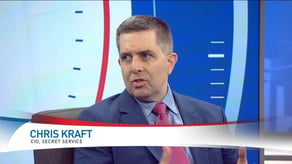
Kraft also discusses lessons learned from helping to establish the Department of Homeland Security's AI Corps, saying that the government can successfully attract highly qualified AI talent. Beyond artificial intelligence, he highlights workforce training, improvements in mobile technology, and reliable field operations as key components of modernization, stressing that employees must understand and fully use existing capabilities to maximize technology investments.
Three Key Takeaways
-
The Secret Service prioritizes AI projects that demonstrate measurable operational value and can scale across the agency.
-
Collaboration with mission partners helps ensure technology investments solve real operational challenges.
-
Workforce training and reliable technology are essential to maximizing the impact of modernization efforts.
Modernizing Critical Infrastructure While Strengthening Cybersecurity
Critical infrastructure providers face unique cybersecurity challenges as they modernize aging operational technology, according to Kynan Carver, Vice President of Cybersecurity at Maximus. He explains that many energy systems combine decades-old operational technology with modern digital infrastructure, creating security risks that traditional approaches cannot fully address. As threat actors increasingly use artificial intelligence to identify vulnerabilities, organizations must strengthen defenses while balancing modernization efforts.

Carver discusses how zero trust frameworks can help limit the impact of cyber incidents by assuming attackers may already be inside a network and restricting lateral movement. He also highlights the role of industry standards and collaboration between government and privately owned infrastructure operators. Looking ahead, Carver says AI offers significant opportunities for cybersecurity teams by improving threat detection, accelerating remediation, and helping analysts identify vulnerabilities before they can be exploited, making security operations more efficient while supporting the protection of critical infrastructure.
Three Key Takeaways
- Aging operational technology requires cybersecurity strategies that account for both legacy and modern systems.
-
Zero trust helps reduce risk by limiting how far attackers can move within compromised environments.
-
AI can improve cybersecurity by identifying vulnerabilities earlier and supporting faster response and remediation. Modernizing Critical Infrastructure While Strengthening Cybersecurity
Department of Energy Expands Enterprise AI with Joulix and Quanta
The Department of Energy continues to expand enterprise artificial intelligence through Joulix and Quanta, according to Bridget Carper Arnone, Deputy Chief Information Officer for Architecture, Engineering, Technology, and Innovation and Acting Chief Data Officer. She explains that Joulix has grown from an initial chatbot with 100 users into an enterprise AI suite supporting 20,000 users across 88 organizations by responding directly to employee feedback and prioritizing use cases that benefit large portions of the department.
Arnone also discusses Quanta,  DOE's secure data and AI platform, which brings together multiple AI models and enterprise data sources to support mission work. She emphasizes that successful AI adoption depends on strong governance, high-quality data, secure integrations, and user trust. As adoption continues to grow, DOE remains focused on modernizing data management, improving efficiency, and ensuring AI tools provide accurate, secure, and actionable information across the department.
Three Key Takeaways
- DOE expands enterprise AI by prioritizing user-driven use cases with broad organizational value.
- Strong data governance and secure integrations are essential to successful AI adoption.
-
Quanta helps employees securely access enterprise data while improving efficiency across mission and administrative work.