

Original Broadcast Date: 08/16/2026
Presented by Billington Cybersecurity
On this edition of Fed Gov Today, federal technology leaders examine three major shifts shaping government: Customs and Border Protection’s race to the cloud, artificial intelligence’s growing impact on cybersecurity, and the General Services Administration’s first year of the OneGov initiative.
CBP Chief Information Officer Sonny Bhagowalia says the agency plans to become completely cloud-based by January 20, 2028. The scale of that effort is enormous. Bhagowalia says CBP handles about 10 billion transactions and roughly 50 billion data exchanges each day while processing approximately 1.2 million people daily through ports of entry and airports. The agency is already more than 88% complete at the application tier, while its database migration is a little more than halfway finished.
Bhagowalia emphasizes that CBP’s strategy goes beyond simply moving existing systems into the cloud. The agency wants modernization to make its mission faster, better, more affordable and more secure. That strategy also prepares CBP for post-quantum cryptography, increased mobility and the massive amount of data moving across its network.
A major piece of that modernization is connecting information technology with operational technology. CBP has assets ranging from planes, boats and drones to vehicles, cameras and other connected devices. Bhagowalia says the agency is developing an edge strategy and testing ways to deliver information directly to agents and officers in remote locations. CBP is also exploring direct satellite communications to phones and building a common operational picture that connects information from different assets and locations.
The conversation then turns to artificial intelligence and cybersecurity. Troy Schneider, president of Billington Cybersecurity, says AI presents 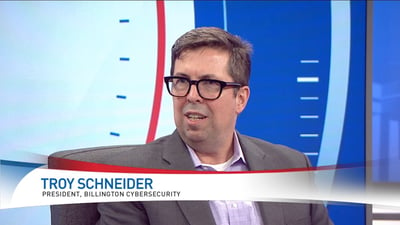 government cyber professionals with both an offensive and defensive challenge. AI can create new capabilities for bad actors, but it can also help agencies identify vulnerabilities, develop patches faster and strengthen their defenses. Schneider says international collaboration remains essential because cyber threats do not respect geographic boundaries.
Critical infrastructure is another growing concern. Schneider points to risks facing systems such as water, telecommunications and electricity. Many operational technology systems were designed without modern cybersecurity—or even internet connectivity—in mind, creating vulnerabilities with consequences that extend far beyond a compromised website or temporary service disruption.
Finally, GSA’s Kyra Stewart looks back at the first year of OneGov. She describes the initiative as an opportunity to rethink federal IT procurement by aggregating demand, standardizing terms and finding cost savings. OneGov has already generated more than $1 billion in savings, includes 70 government organizations and reaches more than 3 million users across IT and AI platforms.
Looking toward year two, Stewart says GSA wants to build sustainable agreements that work for both government and industry. The goal is to centralize common IT purchases while preserving roles for resellers, integrators and other partners. By handling more routine technology 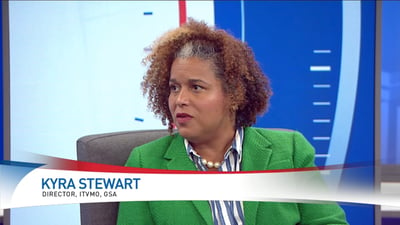 acquisition through GSA, OneGov aims to give agencies more time to concentrate on the specialized technology needs that directly support their missions.
Key Takeaways
CBP is racing toward an ambitious 2028 cloud milestone. CBP CIO Sonny Bhagowalia says the agency plans to be completely in the cloud by January 20, 2028. With more than 88% of its application tier already migrated, CBP is now focusing on databases, high-value assets, edge computing and connectivity that can deliver critical information directly to agents and officers in the field.
AI is creating both new cyber threats and new defensive capabilities. Billington Cybersecurity President Troy Schneider explains that government cyber professionals have to consider AI from both sides. Bad actors can use advanced AI capabilities to increase threats, while agencies can use the same technology to identify vulnerabilities and develop patches faster. The challenge becomes especially important for critical infrastructure, where aging operational technology can leave essential systems exposed.
OneGov is showing major savings while reshaping federal IT acquisition. GSA’s Kyra Stewart says OneGov has generated more than $1 billion in savings, with 70 government organizations participating and more than 3 million users accessing IT and AI platforms through its opportunities. As OneGov moves into its second year, GSA is focused on standardized contracts, optimized pricing and a more efficient acquisition process that gives agencies more time to concentrate on their unique mission needs.