

Original Broadcast Date: 08/30/2026
Sponsored by CACI
The intelligence and defense communities are confronting an increasingly connected operating environment, and leaders across government and industry say success will depend on bringing people, technology and data together faster. On this edition of Fed Gov Today, Defense Intelligence Agency Director Lt. Gen. James Adams, CACI Senior Vice President and Division Manager Dave Reynolds, and leaders from U.S. Space Command discuss workforce modernization, artificial intelligence, intelligence fusion and the growing importance of integration across the military, intelligence community, industry and international partners.
DIA Next: The New Strategy Transforming Defense Intelligence
Lt. Gen. James Adams outlines DIA Next, the strategy he is using to position the Defense Intelligence Agency for a changing technology landscape. He describes DIA as being at the convergence of new technological capabilities and the people needed to take advantage of them.
The strategy has three major pillars. The first is workforce modernization. Adams calls DIA's people its most valuable "weapon system" and says the agency needs to upskill its existing workforce while recruiting additional employees with technical and STEM expertise.
The second pillar is giving that workforce the right technology. Adams says employees need exposure to new tools and the companies building them so they can find new ways to apply those capabilities to DIA's mission. The third pillar is using that combination of people and technology to create a more synchronized, efficient and warfighter-focused organization.
Digital integration is particularly important as DIA expands its use of artificial intelligence. Adams says intelligence organizations have historically integrated information through manual processes, sometimes described as "swivel chair operations." New network and technology capabilities create an opportunity to automate more of that integration.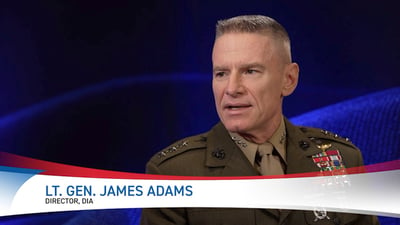
AI, however, is not intended to replace DIA analysts. Adams describes it as a tool for empowering them as they confront unprecedented volumes of data. Analysts will increasingly need to understand how to use those technologies, while DIA will also need data scientists, data analysts and other technical specialists who can implement and improve them.
That transformation could also change how DIA recruits talent. Adams says the agency should consider internships, externships and other arrangements that allow expertise to move between government and industry. Rather than expecting every employee to spend an entire career at one organization, DIA can create opportunities for people to contribute their expertise, accomplish a mission and potentially move elsewhere.
DIA is already developing milestones for that transformation. Adams says its workforce modernization plan includes goals covering the next two months, six months and six years.
Breaking Down the Stovepipes: The New Fight for Intelligence Advantage
The conversation then shifts to intelligence fusion with Dave Reynolds of CACI, who describes fusion as bringing information out of stovepipes and correlating data to generate mission insight and decision advantage.
The volume and variety of available information makes that increasingly important. Reynolds says intelligence organizations need to transition legacy systems toward open architectures capable of sharing information across different formats and sources. That includes traditional intelligence sources alongside publicly available and open-source information.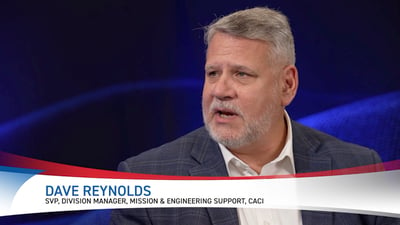
Reynolds says government and industry have become more willing over the past several years to collaborate around open architectures and data sharing. The objective is not simply to aggregate more information. Instead, technology and AI-enabled workflows can handle more of the process of correlating data, allowing analysts to concentrate on critical thinking and judgment.
For agencies evaluating their progress, Reynolds says the starting point should be the mission outcome. Government and industry need a common understanding of what they are trying to achieve, followed by transparent collaboration around their respective challenges and potential solutions.
The Integration Space Race: How Space Command Is Building Decision Advantage
Gen. Stephen Whiting, commander of U.S. Space Command, says the scale of the space domain makes partnerships essential. No individual country, military service, government agency or company can provide everything Space Command needs.
That makes integration necessary across the joint force, intelligence community and federal agencies such as NASA and the Federal Aviation Administration. Allies and international partners provide additional capabilities and geographic advantages, while commercial space companies bring innovation and cost advantages.
Whiting says those relationships cannot wait until a crisis begins. Space Command needs to build partnerships, understand threats and rehearse operations during peacetime so the organizations involved are prepared to operate together if a conflict occurs.
Deputy Director of Intelligence Rob Shaffer says that integration also supports decision advantage. For Space Command, that means delivering intelligence to decision-makers at the speed it is needed.
AI and machine learning can help analysts integrate and synthesize information from government sensors, allies, partners and commercial sources. Schaffer says Space Command is also piloting capabilities that can consolidate policies governing information sharing with foreign partners, potentially accelerating the foreign disclosure process.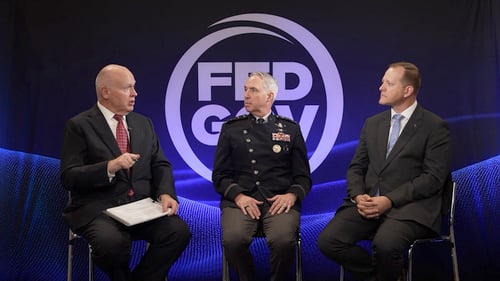
Commercial technology is also changing how the command approaches data. Rather than requiring every provider to conform to one rigid standard, Whiting says new tools make it possible to combine structured and unstructured information from different sources and formats. Commercial space data can also provide rich unclassified information that is easier to share with a broader group of international partners.
As space becomes more congested and contested, Shaffer says the challenge is getting the right information to the right place at the right time. Space Command is developing collection priorities and frameworks that allow it to dynamically focus resources based on operational needs.
Across all three conversations, the common thread is integration. Whether DIA is modernizing its workforce, intelligence organizations are breaking down data stovepipes or Space Command is combining military, allied and commercial capabilities, the goal is to turn an expanding universe of data and technology into faster, more useful information for the warfighter.