

Original Broadcast Date: 09/14/2026
Sponsored by Forward and Carasoft
This episode of FedGov Today examines how federal leaders are strengthening resilience, modernizing technology, and accelerating innovation to meet evolving mission requirements. Through conversations with officials from CISA, industry, and the U.S. Army, the program highlights the strategies organizations are using to address cybersecurity challenges, infrastructure dependencies, and emerging technologies.
Acting CISA Director Nick Andersen discusses the agency’s leadership role in the new Homeland Defense Working Group, a cross-government effort that brings together military organizations, civilian agencies, critical infrastructure operators, industry partners, and international allies. Andersen explains how the initiative focuses on resilience, collaboration, and measurable outcomes, with an emphasis on maintaining essential services during disruptions and improving recovery capabilities. He also shares lessons from CISA’s CI Fortify initiative and the importance of preparing organizations to operate in degraded environments.
David Erickson, co-founder and CEO of Forward, explores the growing complexity of modern network environments and the impact of artificial intelligence on operations and cybersecurity. Erickson explains how AI is increasing the pace of network change while creating new challenges for defenders. He also discusses how mathematical digital twin technology can help organizations better understand network behavior, validate resilience and security, and evaluate changes before deployment.
The program concludes with Matt Willis, Director of Army FUZE, who outlines the Army’s approach to accelerating innovation and technology adoption. Willis explains how FUZE is involving soldiers earlier in the development process, streamlining engagement with industry, and helping companies move promising technologies into operational testing. He also discusses the Army’s XTech competitions and their role in attracting new participants and evaluating emerging capabilities.
CISA’s New Homeland Defense Strategy: Why Cyber Resilience Is the Nation’s Next Front Line
Nick Andersen, Acting Director of CISA, discusses the agency’s leadership role in the new Homeland Defense Working Group, an initiative designed to strengthen collaboration across federal agencies, critical infrastructure operators, industry partners, and international allies. Andersen explains that the group’s mission is to improve the nation’s resilience by focusing on essential services, public safety, national security, and economic continuity.
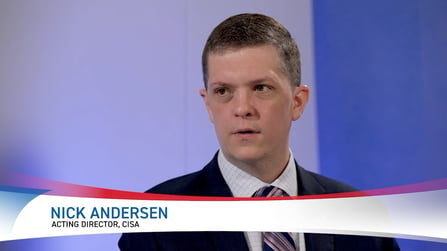 Rather than assigning responsibilities solely based on organizational roles, the working group will rely on partners with the strongest relationships and technical capabilities to lead specific efforts. Andersen emphasizes that success will be measured by tangible resilience outcomes, such as ensuring critical infrastructure can continue to operate during crises. He also highlights lessons from CISA’s CI Fortify initiative, including planning for degraded operating environments and improving coordination among infrastructure operators, technology providers, and government stakeholders.
Throughout the conversation, Andersen underscores that resilience means preparing for disruptions, recovering quickly, and maintaining essential services when they matter most.
Key Takeaways
- CISA’s Homeland Defense Working Group is focused on uniting government, industry, and international partners around measurable resilience goals.
- Andersen says resilience is the ability to quickly maintain and restore essential services, whether disruptions stem from natural disasters or cyber threats.
- The CI Fortify effort is helping organizations prepare to operate effectively in degraded environments while strengthening critical infrastructure partnerships
The AI Network Crisis Nobody Sees Coming—and How Agencies Can Stay Ahead
David Erickson, Co-founder and CEO of Forward, explains why network complexity is becoming one of the biggest obstacles to successful federal modernization. He argues that agencies can no longer rely on traditional approaches, as artificial intelligence accelerates technological change and heightens cybersecurity risks.
Erickson notes that modern networks are extraordinarily complex, with constant changes creating opportunities for outages and vulnerabilities. He warns that AI is not only driving new demands on networks but also helping adversaries identify weaknesses more quickly.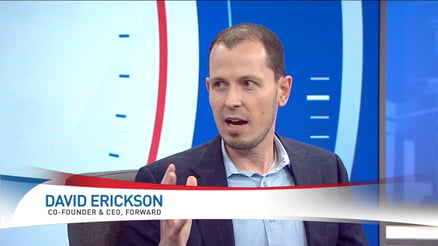 To address these challenges, Erickson describes Forward’s mathematical digital twin technology, which allows
organizations to understand network behavior, verify security and resilience, and test proposed changes before deploying them in production. He says this approach reduces risk by enabling agencies to predict the impact of changes in advance, rather than relying on live networks as testing environments.
Ultimately, Erickson argues that the success of modernization depends on gaining greater visibility, control, and confidence across increasingly complex network infrastructures.
Key Takeaways
- AI is accelerating network complexity while also giving adversaries more powerful tools to identify and exploit vulnerabilities.
- Erickson says agencies need precise visibility into their networks to validate security, resilience, and compliance before making changes.
- Testing network changes in a digital twin environment can help prevent outages and security incidents before they affect mission operations.
The Army’s Startup Revolution: How FUZE Is Getting New Tech to Soldiers in 90 Days
Matt Willis, Director of Army FUZE, outlines how the Army is transforming its approach to innovation by adopting a venture capital mindset and accelerating the delivery of new technologies to soldiers. Willis explains that FUZE brings together multiple innovation programs into a single, streamlined pathway that helps companies engage with the Army more easily while reducing barriers to entry.
Central to the program is a commitment to involving soldiers early and often in the development process, ensuring technologies are tested in realistic operational environments rather than only in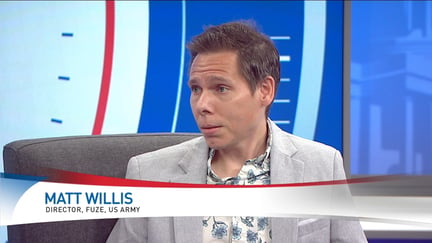 laboratories. Willis says the Army’s goal is to identify promising capabilities and place them in soldiers’ hands within 75 to 90 days, a dramatic shift from traditional acquisition timelines. He also highlights the role of XTech competitions, which attract both established and nontraditional companies by providing funding, operational feedback, and opportunities to demonstrate technologies that address real Army challenges.
The approach is designed to accelerate innovation, reduce risk, and help promising solutions move beyond the “valley of death” into operational use.
Key Takeaways
- Army FUZE is designed to accelerate innovation by connecting emerging technologies with soldiers in operational environments within months, not years.
- Soldier feedback is embedded throughout the development process to ensure technologies perform effectively under real-world conditions.
- The XTech competitions help attract new companies and provide a faster path for promising technologies to transition into Army programs.