

Sponsored by GEBA.
Federal employees are preparing to make benefits decisions for 2027 while the Pentagon works to strengthen readiness and accelerate innovation. On this edition of Fed Gov Today, Francis Rose talks with Greg Klingler, President & CEO of GEBA, about taking an active approach to open season, including health premiums, prescription coverage, and dental and vision options. In a conversation from the Energy Sentry Expo, Dale Marks, Assistant Secretary for Energy, Installations, & Environment at DoW, explains how energy supports warfighter readiness and how operator feedback, commercial partnerships, and changes to acquisition can help deliver capabilities at speed and scale.
Open Season: Making an Active Choice About Your Federal Benefits
Open season gives federal employees an opportunity to reassess their benefits, but familiarity can make automatic renewal the easiest choice. Greg Klingler, President & CEO of GEBA, tells Francis Rose that employees should make a deliberate decision about their coverage for 2027, particularly as premiums and prescription costs change.
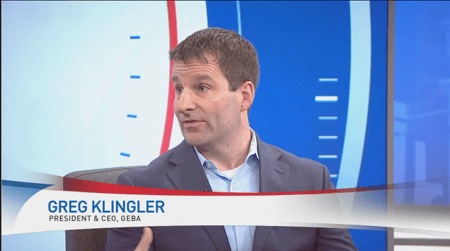 Klingler describes inertia as a powerful influence on benefits decisions. Employees may remain satisfied with a plan based on their experience this year without examining how its terms will change next year. He says that can become expensive when premium increases outpace income growth or medications move into different coverage tiers.
His recommended approach begins with reviewing the available plan information and considering several possible outcomes. Looking at best, middle, and worst case scenarios can help employees identify options that fit their families' needs. Premiums are part of that analysis, but prescription coverage and other potential expenses also deserve attention.
Klingler highlights drug formularies as an area requiring particular care. Differences between a fixed copayment and a percentage of a medication's cost can substantially change what a member pays. He urges employees using GLP-1 medications to examine their coverage closely.
Dental and vision benefits require separate consideration. Klingler explains that their pricing structure differs from federally subsidized health coverage, and that geography can affect the relative value of available dental options. Comparing those choices with other eligible plans may reveal meaningful differences.
Keeping an existing plan can still be the right outcome. The distinction, Klingler says, is whether that decision follows a review or simply happens by default. He encourages employees to use available comparison resources and devote time to understanding their options.
For Klingler, the essential open season task is making an informed, active choice that reflects the coming year's coverage and costs, rather than relying entirely on last year's experience when selecting benefits for the family.
3 Key Takeaways
- Make renewal an active decision by reviewing the coming year’s coverage and costs.
- Check prescription formularies and cost sharing, especially for GLP-1 medications.
- Compare dental and vision options separately, including how location affects pricing.
Energy Readiness and Defense Innovation: Delivering Capability at Speed and Scale
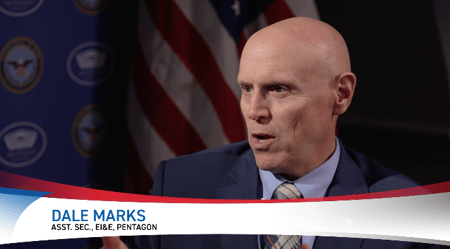 Energy readiness and faster innovation depend on understanding what warfighters need and connecting the systems that support them. Dale Marks, Assistant Secretary for Energy, Installations, & Environment at DoW, tells Francis Rose that installations, operational energy, equipment, and acquisition should work together to deliver usable capabilities.
Speaking at the Energy Sentry Expo, Marks explains why installation energy and operational energy cannot be treated as separate concerns. The batteries service members carry illustrate the connection: adding electronic equipment also adds weight and logistical demands. An integrated approach can help reduce those burdens and shorten supply lines.
Marks emphasizes speed and scale in developing and procuring technology. Commercial industry is an essential partner, and military users need to participate earlier so their experience shapes the solutions being developed. He connects this approach to agile software development, with feedback driving improvements rather than waiting for a perfect system.
An evaluation involving more than 100 drone vendors illustrates that process. Marks describes narrowing the field and testing selected capabilities in different scenarios with military operators providing direct feedback. The goal is not always a single winner. Multiple solutions can address different needs and provide flexibility as requirements change.
Moving quickly also requires engineers and sustainment teams to participate, with energy resilience and redundancy considered throughout development. Marks says the department is willing to accept more acquisition risk at the front end to reduce risks for warfighters later.
Industry collaboration and production capacity complete the picture. Marks discusses reducing bureaucracy, improving communication with vendors, and providing predictable demand to support investment. Progress includes clearing backlogs, accelerating new products, and increasing volumes across the supply chain.
His central objective is to align energy, development, testing, and the industrial base around the same outcome: effective capabilities delivered when warfighters need them, in quantities the mission requires.
3 Key Takeaways
- Connect installation energy, operational energy, and equipment requirements around warfighter readiness.
- Involve military operators early and use repeated testing to improve multiple useful solutions.
- Pair faster acquisition with commercial partnerships, predictable demand, and supply chain capacity.