

Original Broadcast Date: 05/31/2026
Presented by Maximus
This edition of Fed Gov Today explores how defense leaders are accelerating innovation across autonomy, human performance, and special operations technology. US Southern Command Commander General Francis Donovan outlines the vision behind the new Southcom Autonomous Warfare Command, describing it as a joint effort designed to connect requirements, technology developers, operators, and partners into one synchronized ecosystem. He emphasizes that autonomous warfare is not just about unmanned platforms, but about creating a data architecture that improves domain awareness and strengthens collaboration across the hemisphere. Donovan explains that the command will move quickly toward full operational capability with a lean, agile structure focused on integrating capabilities from every military service while supporting missions ranging from counter-drug operations to monitoring the activities of China, Russia, and Iran in ungoverned spaces.
The program also highlights the growing focus on quality of life and resilience for military personnel. Frank Wakeham of Maximus discusses Special Operations Command’s holistic “Preservation of the Force and Family” program, which supports operators through five pillars: physical, psychological, cognitive, spiritual, and social well-being. He explains how emerging technologies, data analytics, and artificial intelligence are helping leaders move from reactive care to more predictive and proactive support for service members and their families.
Later, SOFWERX Director Leslie Babich explains how the innovation lab is helping small and nontraditional companies engage with Special Operations Command faster and more effectively. She credits SOCOM’s culture of creativity and risk reduction for enabling faster prototyping, streamlined partnerships, and more flexible collaboration with startups and commercial technology providers.
SOUTHCOM’s AI Warfighting Revolution: The Push for Autonomous Warfare
General Francis Donovan says US Southern Command is moving fast to build a new Autonomous Warfare Command designed to unify how the military develops and uses autonomous systems across every domain. Speaking at SOF Week 2026, Donovan explains that the future of warfare depends less on individual unmanned platforms and more on creating a seamless data architecture that connects operators, services, partners, and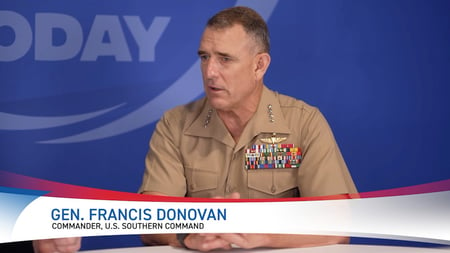 emerging technologies. He describes the command as a lean, agile organization that will rapidly move toward full operational capability while integrating Army, Navy, Air Force, Marine Corps, and Space Force capabilities into one joint framework.
Donovan says the command’s mission goes beyond counter-drug operations and includes improving domain awareness across the Western Hemisphere. He points to growing concerns about the influence of China, Russia, and Iran in ungoverned spaces where criminal organizations also operate. Autonomous systems, he says, can help partners track illicit activity, share intelligence faster, and strengthen regional security. He also emphasizes that logistics, partner relationships, and operational flexibility will ultimately determine how autonomous systems are deployed and sustained across the region.
Key Takeaways
- General Donovan says autonomous warfare only succeeds if every military service operates within a truly joint and connected framework.
- SOUTHCOM is prioritizing data architecture and domain awareness as the foundation for future autonomous operations.
- Donovan believes autonomous systems can help counter both criminal networks and the growing influence of China, Russia, and Iran across the hemisphere.
SOCOM’s Secret Weapon Isn’t Technology — It’s Human Performance
Frank Wakeham of Maximus says Special Operations Command is taking a holistic approach to force readiness by focusing not only on physical fitness, but also on the mental, emotional, cognitive, and family well-being of service members. Speaking at SOF Week 2026, Wakeham explains that SOCOM’s “Preservation of the Force and Family” program has spent the last decade building support systems around five core pillars: physical, psychological, cognitive, spiritual, and social health. He says each pillar plays a critical role in helping operators perform under pressure and sustain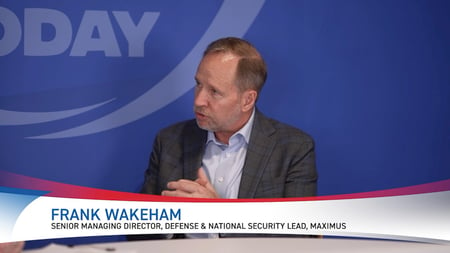 long-term mission success.
Wakeham highlights the growing importance of technology and data analytics in supporting operator readiness. He explains that bringing together data from multiple systems allows leaders to identify trends, measure effectiveness, and move from reactive care to more predictive and proactive support models. Artificial intelligence and machine learning, he says, are helping teams better understand performance gaps and intervene earlier before problems affect mission outcomes. Wakeham also stresses that success depends on integrating support networks across operators, families, theater commands, and partner organizations into one coordinated ecosystem.
Key Takeaways
- SOCOM’s human performance strategy focuses equally on physical, psychological, cognitive, spiritual, and family well-being.
- Wakeham says data analytics and artificial intelligence are helping military leaders shift from reactive support to predictive care models.
- Strong family and social support systems are essential to keeping operators focused and mission ready during deployments.
How SOFWERX Became SOCOM’s Fast Lane for Defense Innovation
Leslie Babich, director of SOFWERX, says the organization’s biggest advantage comes from lowering the barriers that often prevent startups and nontraditional companies from working with the government. Speaking at SOF Week 2026, Babich explains that SOFWERX operates as a nonprofit partnership intermediary for Special Operations Command, helping companies engage with SOCOM in a faster, more flexible 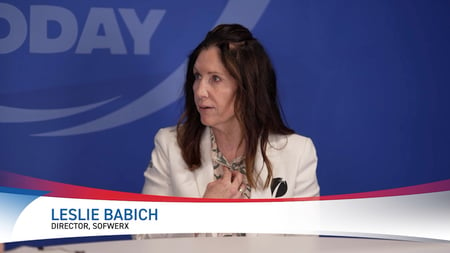 environment outside the traditional government contracting process. She says the organization’s off-base facility, commercial-style engagement model, and broad innovation ecosystem make it easier for companies to connect directly with military stakeholders and share emerging technologies.
Babich says SOFWERX has now facilitated more than $500 million in contracts, driven by a culture focused on speed, creativity, and risk reduction. She explains that SOCOM encourages experimentation and rapid prototyping instead of relying solely on long-term acquisition processes. SOFWERX also helps companies identify the right customer within SOCOM, understand operational needs, and refine what differentiates their technology in a highly competitive market. Babich says success ultimately comes down to persistence, flexibility, relationship building, and a willingness to solve problems in new ways while staying within existing regulations and authorities.
Key Takeaways
- SOFWERX helps startups and nontraditional companies work with SOCOM by simplifying engagement and reducing contracting barriers.
- Babich says SOCOM’s culture encourages rapid experimentation, flexible problem-solving, and faster prototyping.
- Budget constraints and acquisition timelines remain major obstacles to turning promising technologies into operational capabilities.