

Original Broadcast Date: 11/22/2026
Sponsored by Appian
Federal agencies are rethinking how they manage data, modernize legacy technology, and deliver information to the people who need it most. From the Army Corps of Engineers to the battlefield, new approaches to data management and artificial intelligence are creating opportunities to improve government operations. On this episode of Fed Gov Today with Francis Rose, three leaders explore how modernization efforts are changing the way government organizations operate.
Walton Cheung, Command Chief Data and Analytics Officer at the U.S. Army Corps of Engineers, discusses the organization's adoption of Castle VUE, a unified data environment built on the Army's Vantage platform. Cheung explains how the Corps is working to consolidate more than two decades of legacy data infrastructure, improve visibility across hundreds of data sources, and give commanders greater confidence in the information supporting their decisions.
Matt Calkins, CEO and Co-Founder of Appian, explains why federal agencies face growing pressure to replace outdated applications. He discusses how artificial intelligence is creating opportunities to consolidate legacy systems, reduce security vulnerabilities, and rethink how applications share information across government enterprises.
Lt. Gen. Jeth Rey, Deputy Chief of Staff, G-6, U.S. Army, examines the Army Data Operations Center and its role in connecting information across military operations. Rey explains how the Army is moving toward a data-centric environment that helps commanders make faster decisions while improving interoperability with joint and coalition partners.
The Army Corps Is Tackling 20 Years of Data Silos. Here's How
The U.S. Army Corps of Engineers is undertaking a major modernization effort to transform how it manages and shares information across the organization.
Walton Cheung, Command Chief Data and Analytics Officer at the U.S. Army Corps of Engineers, joins Fed Gov Today with Francis Rose to explain how Castle VUE is helping the Corps move beyond more than two decades of legacy data infrastructure. Built on the Army's Vantage platform, Castle VUE aims to consolidate information from more than 300 data sources, improve visibility across organizational functions, and provide reliable information to commanders and decision-makers. Cheung outlines four priorities guiding the effort: establishing a baseline understanding of the data ecosystem, defining stewardship responsibilities, identifying authoritative data sources, and using that information to support better 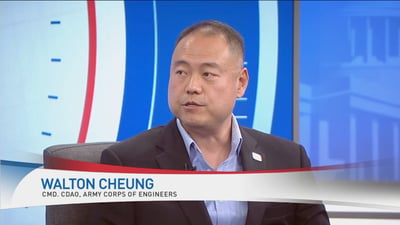 decisions.
He also discusses the challenges of introducing enterprise-wide changes while supporting ongoing engineering, construction, and civil works missions. Rather than waiting for a perfect modernization plan, Cheung emphasizes flexibility, collaboration, and continuous improvement. The ultimate goal is to simplify the Corps' data environment, reduce unnecessary complexity, and make information more accessible to the people responsible for delivering projects and supporting the Army's broader mission.
AI Is Making Legacy Government Systems a Bigger Risk. Here's Why
Matt Calkins, CEO and Co-Founder of Appian, joins Fed Gov Today with Francis Rose at Appian Government 2026 to explain why legacy application modernization is becoming increasingly important. Calkins says older applications already create challenges through high maintenance costs, complicated training requirements, and fragmented information. Now, he argues, emerging AI capabilities are introducing additional cybersecurity concerns. Calkins also discusses how AI agents are changing the way applications interact with data. Unlike traditional software 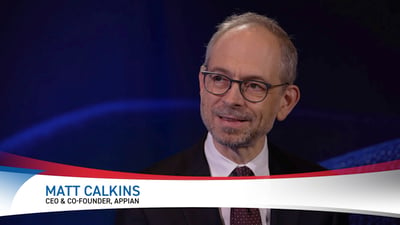 integrations, these agents may retrieve information and take actions across different systems in less predictable ways. That creates new questions about data security, authoritative information sources, and access controls. For Calkins, successful modernization requires agencies to rethink their entire application ecosystem rather than simply updating outdated technology. The goal is to build environments that improve productivity while supporting increasingly sophisticated AI capabilities.
The Army Has a Data Management Problem. This New Operations Center Could Help Solve It
The Army generates enormous amounts of information across its operations, but turning that data into useful intelligence requires connecting systems, organizations, and decision-makers. Lt. Gen. Jeth Rey, Deputy Chief of Staff, G-6, U.S. Army, joins Fed Gov Today with Francis Rose to explain how the Army Data Operations Center (ADOC) is supporting the service's transition toward a data-centric force. Operating in its initial capability phase at Aberdeen Proving Ground, ADOC serves as a central resource for identifying pathways that allow information to move across military formations and enterprise systems. Rey describes the center as a 911 operations center for Army data, helping connect sensors, command-and-control capabilities, and information sources across the force.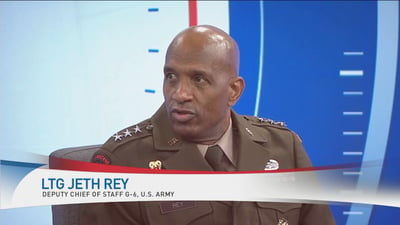
He explains how the Army's Next Generation Command and Control system integrates transport, infrastructure, data, and applications to help commanders make faster decisions. The conversation also explores how ADOC supports interoperability with joint and coalition partners through connections to the Maven Smart System. Rey emphasizes that the Army's challenge is not a shortage of information but how effectively that information is managed. He also discusses the importance of intuitive technology, soldier feedback, and measurable progress as the Army modernizes its data capabilities.