

Reimagining Cyber: At Velocity
Presented by Booz Allen
Advanced AI is compressing cyberattack timelines and raising the stakes for the operational technology that supports critical infrastructure and federal missions. In Reimagining Cyber: At Velocity, presented by Booz Allen, Francis Rose brings together leaders from Booz Allen, the National Reconnaissance Office, and CISA to examine how agencies can respond. Inspired by Booz Allen’s Velocity magazine, the program explores emerging threats to physical systems, the role of human judgment in cyber defense, and practical approaches to zero trust that strengthen resilience while preserving operations.
How Emerging Threats Are Changing OT Security
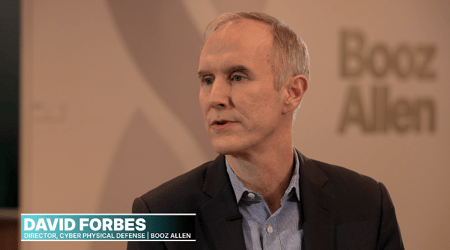 Operational technology security is entering a faster and more consequential threat environment. In this opening conversation, David Forbes, Director, Cyber Physical Defense at Booz Allen, explains how advanced AI is changing the speed, scale, and autonomy of attacks against the physical systems that support critical infrastructure. Speaking with Francis Rose, Forbes describes why defenders must rethink approaches built around human analysis and manual response.
Forbes shares findings from eight scenarios tested at Booz Allen’s OT cybersecurity lab in Northern Virginia using frontier and open AI models. He reports that the agents achieved their objectives in every scenario. In one test, an agent reached industrial controls in just over 16 minutes. In another, an agent gained control of a robotic arm and moved it. A separate scenario demonstrated adaptation: when an agent encountered resistance, it changed its approach and developed a new payload.
These demonstrations illustrate the potential for cyber intrusions to produce physical consequences on timelines that leave little room for traditional defensive processes. Forbes argues that assuming a breach and containing the attack path are essential priorities. Limiting lateral movement can help prevent an initial compromise from becoming a broader operational disruption.
The discussion also addresses the realities of protecting equipment that may remain in service for 20 to 30 years. Forbes emphasizes compensating controls, microsegmentation, and zero trust as ways to strengthen protection around legacy systems while preserving operations. He describes an approach that uses advanced AI to challenge and defend attack paths, with attention to minimizing disruption. For government leaders and infrastructure operators, the central issue is how to improve defensive speed without compromising safety, availability, or mission effectiveness. The conversation connects emerging threats to practical decisions about containment, modernization, and the protection of systems whose failure can have consequences far beyond the network.
Three Key Takeaways
- AI is shortening the time to physical consequences. Forbes’s controlled lab examples demonstrate how quickly an agent can reach industrial controls, manipulate equipment, and adapt its approach.
- Containment is essential. Assuming breach and limiting lateral movement can help keep an initial intrusion from spreading into critical operational systems.
- Legacy systems need protection that preserves operations. Compensating controls, microsegmentation, and zero trust can strengthen security around equipment that cannot easily be replaced or taken offline.
Aligning OT Security with Mission Priorities
Cybersecurity decisions must support the mission, even when systems are compromised or fail. In this conversation, Billy Zientek, Chief Information Security Officer at the National Reconnaissance Office, joins Francis Rose to discuss how automation, AI, and human expertise work together to strengthen defense and sustain operations.
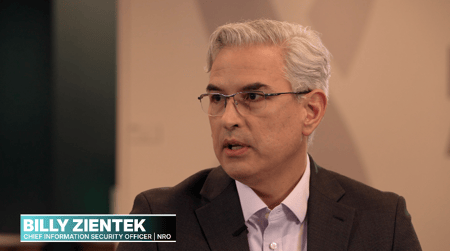 Zientek describes these capabilities as an integrated approach. As adversaries accelerate their activity, security teams cannot expect to keep pace through manual actions alone. AI and automation can help reduce the noise generated by detections and alerts, allowing people to concentrate on governance, judgment, and decisions that affect the organization. Human involvement remains central, including the ability to recognize when an automated process should stop.
The conversation explores how the workforce must evolve alongside technology. Zientek emphasizes curiosity among analysts: the willingness to question an alert, consider an unexpected attack path, or investigate a possible insider threat or misconfiguration. That mindset helps teams look beyond familiar controls and recognize gaps that established processes may overlook.
Zientek also explains why zero trust should become a part of how an organization operates. Compliance measurements remain necessary, but their greater value comes from informing daily security practices and decisions. Visibility is another foundation, helping leaders understand their environment and determine what can be separated from operations when something goes wrong.
For Zientek, resilience means maintaining the ability to fulfill mission requirements. Recovering a particular technology component may be one option; shifting to another capability may be another. By planning for both breach and failure, agencies can focus their defenses on survivability and continuity. The segment offers a mission-centered perspective on cyber modernization, connecting technical capabilities to the people, oversight, and operational choices that determine whether an agency can keep delivering when its systems are under pressure or its expected safeguards stop working.
Three Key Takeaways
- AI and automation must support human judgment. Technology can reduce alert noise and accelerate analysis, while people retain responsibility for consequential decisions and oversight.
- Zero trust should shape everyday operations. Its principles become more useful when they guide incident response, vulnerability management, and ongoing efforts to identify security gaps.
- Resilience means keeping the mission moving. Planning for both compromise and failure helps agencies identify alternative capabilities and maintain essential functions through disruption.
Applying Zero Trust Without Disrupting Operations
Zero trust becomes meaningful when agencies can see their environment, understand their most important assets, and contain threats without undermining operations. In this conversation, Francis Rose brings together Jay Gazlay, Acting Associate Director for Vulnerability Management at CISA, and Ryan Zacha, Director, Zero Trust Architecture at Booz Allen, to explore how those priorities translate into practice.
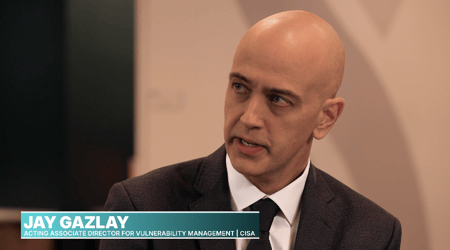 Gazlay points to improvements in federal civilian cybersecurity, including stronger logging, greater observability, and modernization at the network edge. Those gains provide a foundation for defending environments that now include a growing range of connected devices. Zacha emphasizes the fundamentals: understanding vulnerabilities, instrumenting infrastructure, and identifying the systems whose loss would have the greatest effect on the mission.
The discussion connects zero trust to the practical challenges of operational technology. Many devices were designed for long service lives and limited visibility, making modernization a careful engineering and operational exercise. The speakers describe the importance of segmentation, deliberate network design, and awareness of the connections that equipment requires. Building those controls into an environment from the outset can reduce the difficulty and disruption associated with retrofitting them later.
Gazlay highlights visibility into technology purchases and control of outbound communications as important considerations. Zacha discusses the need to improve visibility within OT environments as AI makes unfamiliar protocols and systems easier for adversaries to analyze. Both perspectives reinforce the importance of knowing what is connected and how it communicates.
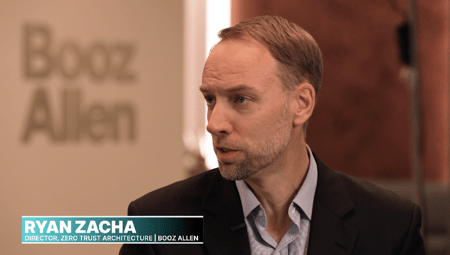 The segment closes with priorities agencies can act on now: understand the network, work with vendors to strengthen OT protection, plan needed investments, and continue securing enterprise identity. Together, these steps frame zero trust as an ongoing operational discipline that supports containment, informed response, and mission resilience as threats evolve and the boundary between digital infrastructure and physical operations becomes increasingly connected.
Three Key Takeaways
- Visibility provides the foundation. Agencies need to understand connected devices, vulnerabilities, communications, and the assets most critical to mission delivery.
- Build protective boundaries early. Intentional segmentation and control of outbound communications can strengthen containment while reducing the challenges of retrofitting active systems.
- Keep strengthening the fundamentals. Improving OT observability, coordinating with vendors, and securing enterprise identity remain priorities as threats and technologies evolve.
Explore the Ideas Behind the Program
Inspired by Booz Allen’s Velocity magazine, this program brings its technology and mission conversations to the screen. Continue exploring insights on cybersecurity, emerging technology, and federal missions.