Original Broadcast Date: 05/31/2026
Presented by Maximus
Special Operations Command is continuing to expand its long-running focus on human performance and resilience, and Frank Wakeham of Maximus says the mission depends on supporting far more than physical fitness alone.
Speaking at SOF Week 2026, Wakeham explains that SOCOM’s “Preservation of the Force and Family” program takes a holistic approach to operator readiness by focusing on five interconnected pillars: physical, psychological, cognitive, spiritual, and social well-being.
“One of the cornerstones of that is this holistic approach to health,” Wakeham says.
He explains that the program has been in place for roughly a decade and is designed to strengthen force endurance, mission readiness, injury recovery, and overall operator performance. The effort also recognizes that operators do not function in isolation. Instead, readiness depends on an ecosystem that includes families, teammates, support personnel, and leadership structures working together toward the same goals.
“It comes with a strong recognition that that ecosystem of individuals all need to be synchronized and integrated,” Wakeham says.
Wakeham says each of the five pillars carries equal importance because operational performance depends on multiple factors coming together simultaneously. While physical readiness remains essential in the special operations community, he notes that psychological resilience, cognitive performance, and family stability all directly affect mission success.
“When a service member deploys, the family unit and the family’s stability and social network are really important for the service member’s ability to stay focused on the mission,” Wakeham says.
He adds that operators regularly work in stressful, high-pressure environments where sleep deprivation, mental fatigue, and constant decision-making can create long-term strain. Supporting cognitive performance and psychological health helps operators sustain performance under those conditions.
“The cognition piece and the decision support and sleep deprivation, all of those things come together to maximize operator performance and mission success,” Wakeham says.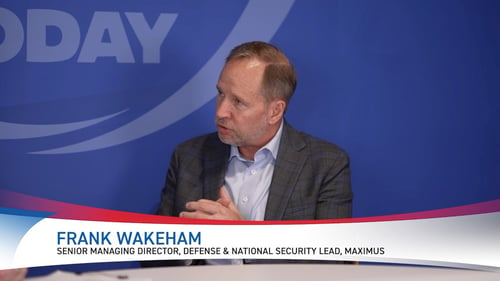
As SOCOM continues refining the program, Wakeham says technology is playing an increasingly important role in improving how leaders understand and support force readiness. He identifies two major technology trends shaping the future of the program.
The first involves bringing together large amounts of operational and health-related data from multiple systems into one environment where leaders can generate actionable insights.
“The data sits in a lot of different places,” Wakeham says.
He explains that the challenge now is curating, normalizing, and aggregating that data in ways that allow analysts and commanders to identify patterns, gaps, and measures of effectiveness more efficiently. Once that data becomes centralized, advanced tools such as machine learning and artificial intelligence can help leaders move beyond traditional reporting models.
“It gives us the opportunity to move from diagnostic analytics to more predictive and prescriptive,” Wakeham says.
That shift allows leaders to identify challenges earlier and intervene proactively before problems begin affecting individual performance or mission readiness. Wakeham says the goal is to get “farther left of the problem” by spotting warning signs and improving prevention efforts rather than reacting only after issues emerge.
The second technology trend involves scaling support across a globally distributed force. Wakeham says successful implementation depends not only on expertise across the five pillars, but also on building teams that understand the mission and can integrate directly into the operational community.
He says organizations supporting SOCOM need both technical capability and a deep understanding of operational objectives.
“We think about scale, we think about speed, and we think about agility,” Wakeham says.
To achieve that, Wakeham says purpose-built partnerships are essential. Those partnerships must bring together global reach, operational familiarity, and technical expertise while integrating seamlessly with theater commands and component organizations around the world.
“It really partner[s] and become[s] integrated into the community fabric as a member of the team,” Wakeham says.
The broader strategy reflects a growing recognition across the military that readiness extends beyond equipment and training alone. Wakeham says human performance increasingly depends on the ability to support the entire service member and family ecosystem while using data and technology to personalize care and improve long-term outcomes.
At the center of the effort is the understanding that maintaining elite performance requires sustained attention across every aspect of health and resilience.
“No, I don’t think so,” Wakeham says when asked whether one pillar matters more than another. “They all are very significant and important components.”
As SOCOM continues evolving its human performance programs, Wakeham says the combination of integrated support systems, advanced analytics, and coordinated partnerships is helping create a more proactive and resilient force prepared for the demands of modern operations.