Presented by govSlackers & Carahsoft
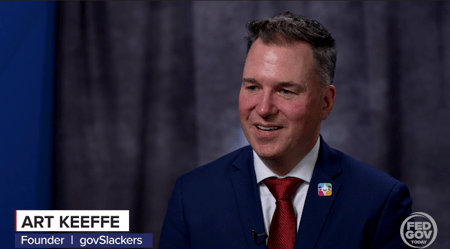
The next phase of government AI may not be only about data lakes, models or dashboards. Art Keeffe, Founder of govSlackers, says it will also be about bringing AI agents into the daily flow of government work alongside the people who have mission expertise.
In this Innovation in Government segment from the GovExperience Summit, Keeffe explains that govSlackers implements Slack for government. The company’s name, he says, is meant to be direct: government users who adopt Slack often become enthusiastic “Gov Slackers.” But the conversation quickly moves beyond collaboration software into the future of AI-enabled work.
Keeffe says government has spent much of the past decade consolidating siloed data into data lakes. That foundational data work is important, but he sees the next step as consolidating expertise. Government is full of people who understand programs, constituents, missions and processes. AI will be most useful when it helps those experts work better, not when it attempts to replace them.
His point is grounded in service delivery. Data does not serve veterans or people in health care by itself. Humans do. That means agencies need a human-in-the-loop approach where AI agents support experts who are already working inside government.
 Collaboration platforms can play an important role in that model. Keeffe argues that tools like Slack bring people, processes and tools together. They can also provide a place where AI agents are integrated into the workforce. As agencies adopt agents from multiple providers, they will need a common environment where those agents can be accessed, managed and coordinated.
That creates a new management challenge. Public sector leaders may soon manage not only people, but also AI agents and bots that support teams. Without structure, that could create sprawl. Keeffe says agencies will need guardrails that define how agents are used and what data they can access. Those controls will be essential to keeping AI useful, secure and aligned with agency needs.
He also points to early use cases. Personal assistants, employee onboarding and other repeatable tasks are examples of work that agents could support. These are often lower-level administrative responsibilities that government experts have to perform in addition to the mission work they care most about. If agents can take on some of that burden, employees can spend more time on higher-value responsibilities.
The segment offers a practical way to think about AI in the workforce. Rather than imagining AI as a separate tool or a replacement for people, Keeffe sees agents as collaborators embedded in the systems where work already happens. That approach could make adoption more natural, because employees would not have to jump between disconnected tools to get help.
It also reinforces the importance of governance. Agents need defined roles, access limits and oversight. They should support the work, not create confusion about responsibility or authority. The more agents become part of daily operations, the more agencies will need clear policies and technical controls.
Keeffe’s message is optimistic but grounded: people are not going away. Government expertise remains essential. The opportunity is to use AI agents to reduce repetitive work, connect knowledge and help public servants focus on the tasks that require judgment, context and mission understanding.
Key Takeaways
- AI adoption should focus on connecting expertise, not just consolidating data.
- Collaboration platforms can become places where AI agents work alongside employees.
- Guardrails are essential to prevent agent sprawl and define appropriate data access.