Presented by Carahsoft
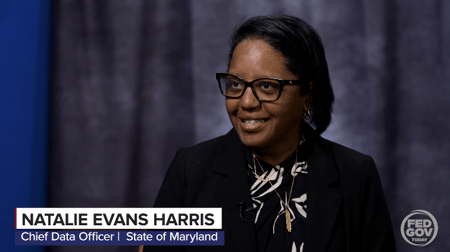
Data has long been seen as the key to better government decision-making. Natalie Evans Harris, Chief Data Officer for the State of Maryland, says the conversation is evolving. The future of data democratization is not necessarily about centralizing everything. It is about understanding where data lives, making it accessible for the right purpose and using it to improve service delivery.
In this Innovation in Government segment from the GovExperience Summit, Evans Harris explains that silos are not always negative. Government does not have to rebuild every infrastructure or centralize every dataset for innovations like AI to be useful. Instead, agencies need to better understand the data landscape so they know where to find quality data when it is needed.
That perspective is especially important in the public sector, where data is collected for a specific purpose. Evans Harris notes that government agencies collect data because they are delivering benefits, complying with legal requirements or providing services. That is different from the private sector, where data may be collected for marketing or communications. In government, data use must be tied to mission, authority and trust.
 The challenge is to make services easier for constituents without unnecessarily moving personal information across systems. Evans Harris describes the goal as helping people apply once or access once, while the back-end work happens behind the scenes. Citizens should not need to know whether the Department of Environment, Department of Housing or another agency is involved. They need benefits, services, clean streets, grants or other support. Government should make the process easier while protecting their information.
Maryland’s One App is the central example. Evans Harris says the state launched the application late last year as one place where people can apply for multiple benefits. Instead of applying separately for SNAP, education grants or other benefits, constituents can use a single application that helps the state determine which services may meet their needs.
The innovation comes from recognizing that many eligibility processes use similar data. If the state can collect that information once and use it appropriately across multiple processes, it can reduce burden on constituents and improve efficiency for agencies. Evans Harris says this creates time savings for the people seeking services and business process optimization for the state.
The conversation also turns to AI. Evans Harris says her team looks at AI through two lenses: data quality and people. AI will only be as good as the data it receives. Agencies need trustworthy data, governance practices, quality standards and proper tagging, especially when data is restricted or contains personally identifiable information. Good data helps produce more trustworthy AI outputs.
The people side is equally important. Evans Harris says people trust what they understand. Agencies need workforce development, training, workshops and tools that help employees understand what to question when using data and AI. The goal is not just to introduce AI tools, but to build confidence and competence in how they are used.
Maryland’s approach shows how data can improve both service access and internal operations. Collecting information once can reduce burden. Understanding the data landscape can support AI. Workforce development can help employees use new tools responsibly.
For agencies everywhere, the lesson is simple and powerful: better data use should make government easier for people, not more complicated.
Key Takeaways
- Data democratization is about awareness and access, not just centralization.
- Maryland’s One App allows residents to apply for multiple benefits through one application.
- AI adoption depends on data quality, governance and workforce understanding.