Presented by Feith Systems & Software & Carahsoft
Few organizations generate and manage information at the scale of the Department of Defense. With millions of users, diverse mission sets, and highly sensitive data, the DoD faces unique challenges as it modernizes records management for a digital and AI-enabled future. In a discussion with Mark Patrick, Records Officer at the Department of Defense, and Dan Feith, CEO of Feith Systems & Software, Inc., the focus turned to how AI is reshaping records management across one of the largest organizations in the world.
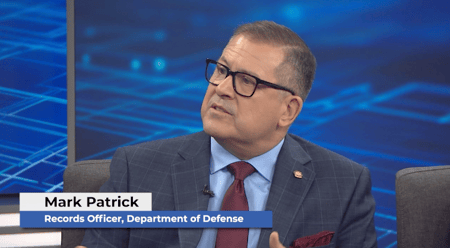 Mark Patrick explained that the relationship between records and data is evolving rapidly within the department. While records have always been a subset of data, the sheer volume and diversity of information—ranging from traditional documents to multimedia and machine-generated data—has changed the way records must be managed. As AI tools become more widely available, ensuring that data used by those tools is trustworthy has become a priority.
Patrick noted that the department’s data strategy emphasizes curation, automation, and governance. These principles are essential for realizing a return on investment from AI. Without proper metadata, categorization, and controls, AI systems risk producing unreliable or misleading results. Automation, particularly in enriching metadata and classifying information, helps make records discoverable and usable at scale.
One of the most significant changes Patrick described is the shift toward embedding records management into systems from the outset. Historically, records management was often treated as an afterthought, becoming a burden when systems were retired or migrated. By building records requirements into acquisition and system design, the department aims to preserve institutional memory and reduce long-term risk.
Legacy records present another challenge. The DoD holds vast collections of paper records and data stored in aging systems. Decisions about digitization are driven by business value and operational need. Some records are digitized to meet permanent retention requirements, while others are converted to support ongoing missions. Patrick emphasized that these decisions require careful analysis, particularly as NARA no longer accepts paper permanent records.
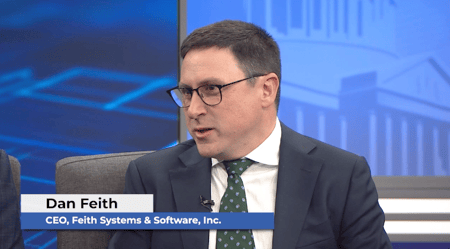 Dan Feith expanded on how AI enables agencies to unlock value from both legacy and newly created records. AI excels at working with human-generated content such as reports, correspondence, and analysis. Once digitized, AI can extract text, recognize handwriting, identify key themes, and summarize content. These capabilities allow agencies to process records at a scale that would be impossible using manual methods alone.
Feith described AI as transforming records from static files into dynamic sources of insight. AI tools can analyze collections of documents to identify trends, surface critical information, and support faster decision-making. This capability is especially valuable in defense contexts, where timely access to information can have mission-critical implications.
The conversation also addressed the challenge of integrating legacy and modern systems. Patrick explained that legacy information often contains valuable institutional knowledge that must be preserved. At the same time, agencies must make pragmatic decisions about where to invest limited resources. AI can assist in evaluating legacy records, helping agencies determine what should be digitized, retained, or disposed of.
Both speakers emphasized that technology alone is not enough. Governance and planning remain essential. Records management must be approached as an enterprise capability rather than a system-by-system function. By aligning records management with broader data and AI strategies, the department aims to support operational effectiveness while maintaining compliance and accountability.
Key Takeaways
-
AI is essential for managing records at the scale and complexity of the DoD.
-
Records management must be built into systems from acquisition through retirement.
-
Digitization and automation unlock institutional knowledge and support faster decisions.