Presented by Tungsten Automation & Carahsoft
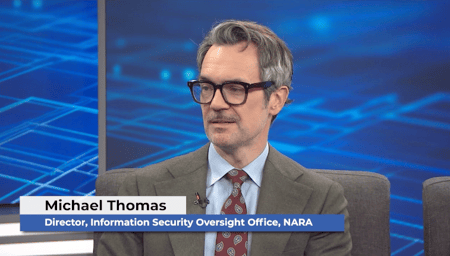
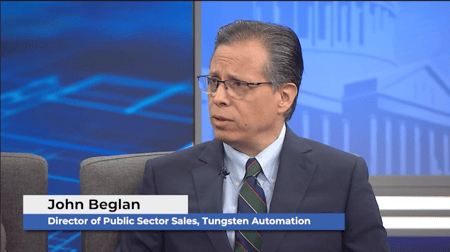
As government information becomes increasingly digital, agencies face the dual challenge of protecting sensitive data while improving access and transparency. A conversation with Michael Thomas, Director of the Information Security Oversight Office at NARA, and John Beglan, Director of Public Sector at Tungsten Automation, highlighted how automation and standardization are helping agencies navigate that balance.
Michael Thomas described ISOO’s role as overseeing how the federal government handles sensitive information, both classified and controlled unclassified. The office helps establish policy, provides guidance and training, and inspects agencies to ensure compliance. One of the most persistent challenges agencies face is limited staffing. Information security and records teams are often under-resourced, even as the volume of information they manage continues to grow.
 Technology has become a critical enabler. Thomas noted that agencies increasingly recognize they cannot rely solely on human processes to manage the scale of modern information. Automation allows agencies to process records more efficiently while maintaining appropriate controls. This is particularly important as agencies work to reduce over-classification and improve information sharing.
John Beglan emphasized that automation is no longer optional. Manual approaches that rely on adding staff are unsustainable. Modern platforms manage information from ingestion through workflow and storage, applying consistent rules and controls across the lifecycle. These tools enable agencies to scale operations while keeping humans involved for oversight and decision-making.
Trust emerged as a central theme. Internally, agencies must trust that automated systems are applying protections correctly and consistently. Externally, the public must trust that government information will be released accurately and in a timely manner. Thomas explained that delays in processing FOIA requests or declassification reviews can erode public confidence, even when those delays stem from resource constraints.
Standardization and interoperability play a key role in addressing these challenges. When agencies manage information in consistent ways, it becomes easier to apply automation, gather analytics, and assess system health. Thomas highlighted the potential for data-driven insights that could help policymakers and oversight bodies better understand how information is classified, shared, and released across government.
 The discussion also underscored the importance of culture. Technology alone cannot solve challenges related to information sharing and protection. Agencies must adapt processes and mindsets to fully benefit from automation. Trust in tools develops over time as users gain experience and confidence in their reliability.
Ultimately, the conversation reinforced that effective information management is foundational to democratic accountability. The ability to protect sensitive information while ensuring appropriate access is central to maintaining public trust. Automation and governance, when implemented thoughtfully, can help agencies meet both objectives.
Key Takeaways
-
Automation helps agencies manage sensitive information despite limited resources.
-
Trust depends on transparency, consistency, and human oversight.
-
Standardized practices enable better analytics and accountability.