Presented by Microsoft & Carahsoft
 If an organization lacks guardrails, deployment templates, documented procedures or reliable development practices, adding AI may magnify those weaknesses. The technology can generate code and speed up workflows, but faster activity does not automatically produce better or safer results. Errors, vulnerabilities and poor decisions can spread more quickly when the underlying process is not sound.
Agencies with mature DevSecOps practices are better positioned to use AI as a force multiplier. Documented procedures, approved templates, security controls and government-specific requirements can ground AI systems in the organization’s actual operating environment. That grounding is important because federal agencies work under policies, restrictions and mission demands that may not apply in the commercial sector.
Responsible adoption also requires human review. AI systems can reflect bias in their training data or generate an answer that appears technically correct but is unsuitable for a particular agency. A recommendation may conflict with government policy, security restrictions or an approved technology environment even when it sounds plausible.
Culture and measurement are equally important. Federal leaders may be understandably cautious about exposing sensitive information, generating unexpected costs or deploying a tool the workforce does not use. Training, clear use cases and organizational preparation help turn that caution into deliberate adoption. Before introducing AI, leaders should also establish a baseline and define the outcome they want to improve, whether that is development speed, defect rates, security findings, user satisfaction or mission time saved.
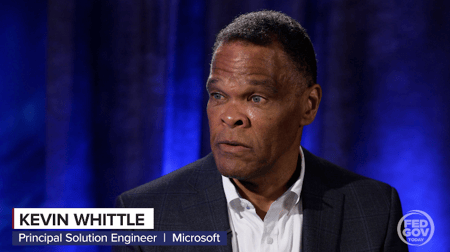
Whittle’s message is straightforward: successful AI adoption begins before the AI tool arrives. Strong governance, mature DevSecOps, trained people and meaningful metrics create the conditions in which AI can deliver lasting value.
Key Takeaways
- AI can magnify weak processes just as easily as it can accelerate strong ones.
- Agencies should ground AI in documented procedures, government requirements and established security controls.
- Human review, workforce preparation and measurable success criteria are essential to responsible adoption.