Presented by Carahsoft
The Department of the Navy’s early DevSecOps environment resembled a “Wild West,” with teams establishing dozens of separate tools and platforms. That experimentation brought developers into the process, but it also created complexity, duplication and a larger security footprint. Justin Fanelli, Chief Technology Officer at the Department of the Navy, explains how the organization is moving toward a more scalable enterprise model centered on Orion.
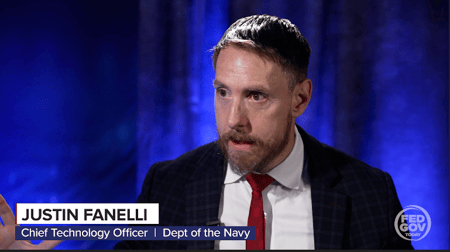 Designating Orion as the Navy’s primary DevSecOps pipeline gives approximately 25,000 developers a proven starting point while preserving other environments for specialized needs. Teams no longer have to repeatedly select tools, learn different platforms or repair the same integrations. They can direct more energy toward difficult mission problems.
The goal is not consolidation for its own sake. Fanelli says the Navy is measuring whether a streamlined environment produces faster delivery and meaningful results for users. The organization is comparing previous performance with current outcomes, including tasks that once required dozens of hours and are now largely automated. User time saved connects the work of developers to tangible mission improvements.
Enterprise standardization also strengthens cybersecurity. Securing dozens of independent environments requires teams to manage a much larger set of configurations and potential weaknesses. Reducing that footprint allows the Navy to become highly proficient in the controls and practices it uses repeatedly, including zero trust and automated patching.
Orion also includes an incubator where teams can prove a new capability rather than waiting months through a conventional onboarding process. That lowers barriers to experimentation while keeping development within a structured and secure environment.
The workforce benefits as well. A common platform reduces repetitive exploration and allows skilled employees to concentrate on the smaller number of questions that require judgment. Faster feedback can improve engagement because developers see their ideas become operational capabilities more quickly.
The Navy’s evolution demonstrates how enterprise platforms and selective standardization can support both speed and flexibility. A strong default path, combined with justified alternatives, can reduce overhead and help the development enterprise deliver faster, measurable outcomes for users and the mission.
Key Takeaways
- Orion gives approximately 25,000 Navy developers a common enterprise DevSecOps path.
- Platform consolidation reduces integration overhead and the cybersecurity footprint while improving repeatable controls.
- The Navy is measuring success through delivery speed, automation and user time saved.