Presented by Arqit & Carahsoft
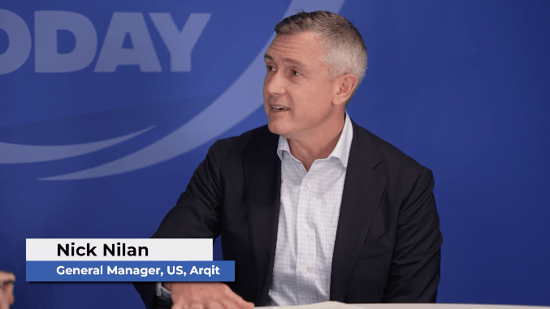
Nick Nilan, General Manager, U.S. at Arqit, believes cyber resilience has become fundamental to every mission conducted across the defense community. At SOF Week, Nilan discussed how changing operational environments, growing interoperability requirements, and increasingly sophisticated adversaries are driving new approaches to cybersecurity and encryption.
According to Nilan, cybersecurity is no longer a standalone function operating behind the scenes. Instead, it has become an essential component of mission success. As adversaries improve their cyber and electronic warfare capabilities, organizations must ensure security measures are integrated directly into operational planning and technology design.
 One of the most significant challenges facing defense organizations today is the increasing emphasis on interoperability among joint forces, allies, and mission partners. Modern operations require information sharing across organizations, nations, and security domains at a scale that was unimaginable just a few years ago. While these partnerships are critical to mission success, they also create new cybersecurity complexities.
Nilan explained that traditional encryption methods often struggle in mission partner environments. Public Key Infrastructure, which forms the foundation of much of today's secure communications, can be cumbersome when organizations need to exchange certificates and cryptographic credentials across multiple partners. Hardware-based encryption solutions can also present limitations because they may not be easily shared across coalition environments.
Arqit's approach focuses on software-based encryption designed specifically to provide greater flexibility in complex operational settings. By removing some of the barriers associated with traditional cryptographic models, organizations can maintain security while enabling faster collaboration and information sharing among mission partners.
A central theme of the discussion was the concept of secure-by-design. Nilan believes organizations are increasingly recognizing that security should not be viewed as an obstacle to mission accomplishment. Instead, cybersecurity should function as an enabler that allows operators to accomplish objectives more effectively and confidently.
Recent conflicts around the world have reinforced this mindset. Lessons learned from operations in Eastern Europe and the Middle East demonstrate that organizations must be willing to challenge longstanding assumptions and adopt new approaches when existing methods no longer meet operational requirements.
The emergence of unmanned systems, artificial intelligence, and highly distributed operational environments is further accelerating the need for change. Traditional security architectures often struggle to scale effectively in these environments. As organizations deploy increasing numbers of autonomous and software-driven capabilities, cybersecurity solutions must evolve to keep pace.
Key Takeaways
• Cybersecurity is increasingly becoming a mission enabler rather than a mission constraint.
• Mission partner environments require more flexible approaches to encryption and secure communications.
• Software-based cryptography can help organizations adapt security faster than traditional approaches.