Presented by ScienceLogic & Carahsoft
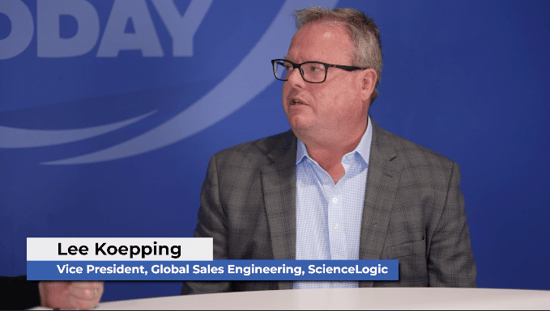
Lee Koepping, Vice President of Global Sales Engineering at ScienceLogic, believes the growing mismatch between technology innovation and government acquisition processes is one of the most important challenges facing public sector organizations today. At SOF Week, Koepping discussed how government and industry can work together to ensure innovation reaches mission operators more effectively.
Technology is evolving faster than ever before, particularly as software increasingly replaces hardware as the primary driver of innovation. At the same time, acquisition organizations face growing pressures related to oversight, justification, compliance, and workforce turnover. These competing realities often create friction between the speed at which new technologies emerge and the pace at which organizations can adopt them.
Koepping noted that traditional procurement models were often built around detailed feature specifications and rigid requirements. While those approaches may have worked in slower-moving environments, they can create challenges in today's technology landscape. By the time a solution is procured, the underlying technology may already be outdated.
 To address this issue, many government organizations are shifting toward outcome-based acquisition strategies. Rather than prescribing specific technical features, agencies are increasingly focused on defining the operational results they want to achieve. This creates greater flexibility for industry partners while helping ensure investments remain aligned with mission objectives.
The move toward outcome-based requirements also encourages organizations to think differently about how success is measured. Koepping explained that defining outcomes is only part of the challenge. Agencies must also determine how they will measure progress and validate that objectives have been achieved.
Another positive development is the growing dialogue between government and industry. Historically, communication opportunities were often limited once formal acquisition processes began. Today, agencies are engaging more actively with vendors to understand available technologies and explore possible solutions before requirements are finalized.
Industry also has a responsibility to support this shift. Koepping argued that vendors should focus less on individual product features and more on the measurable outcomes their solutions enable. By emphasizing mission results rather than technical specifications, industry can help educate customers and improve acquisition strategies.
Looking ahead, Koepping sees artificial intelligence playing an increasingly important role within acquisition itself. AI may help streamline procurement processes, improve efficiency, validate results, and support better decision-making.
Key Takeaways
• Outcome-based acquisition strategies help align technology investments with mission needs.
• Increased dialogue between government and industry improves procurement outcomes.
• AI has the potential to improve efficiency and decision-making throughout the acquisition process.
.png)