Presented by OpenText & Carahsoft
Records management has evolved from a narrowly defined archival function into a strategic discipline that supports mission outcomes, compliance, and innovation. In a conversation with Susan Little, Former Director of Data and Records Compliance at HHS, and Keith Nelson, Head of Public Sector at OpenText, the focus turned to how technology and workforce roles are changing together.
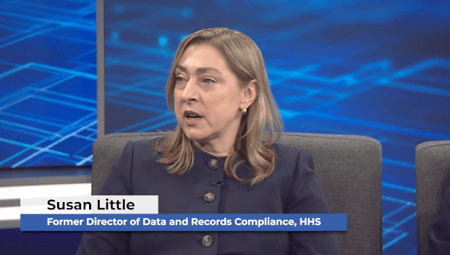 Susan Little reflected on her experience across agencies of different sizes. Early in her career, records management focused largely on paper files and end-of-life archiving. Records managers were expected to assemble and preserve information primarily for legal or historical purposes. Over time, that role has expanded dramatically.
Today, records managers are involved throughout the information lifecycle, from creation to disposition. They work closely with IT, legal, and mission leaders to ensure information supports business processes while meeting regulatory requirements. Little emphasized that records managers have become business partners who help agencies operate more efficiently and effectively.
Keith Nelson described how automation is transforming day-to-day work. Zero-click records management reduces the burden on employees by allowing systems to automatically categorize, tag, deduplicate, and manage records. This approach assumes that most users will not consistently apply records rules correctly—and designs systems accordingly. By removing manual steps, agencies reduce errors and improve consistency.
Both speakers highlighted the connection between records management and AI readiness. AI tools depend on clean, well-organized data. Agencies that have not invested in records management foundations struggle to derive value from AI. Digitization alone is not enough; information must be intelligently categorized and governed.
The conversation also addressed workforce skills. Modern records professionals need technical fluency, adaptability, and curiosity. As technology continues to evolve, records managers must be comfortable working with automated systems and analytics tools. At the same time, human judgment remains essential for oversight, policy interpretation, and exception handling.
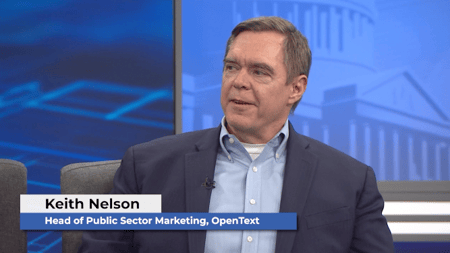 Looking ahead, capabilities such as auto-redaction, intelligent categorization, and deduplication promise to further streamline records work. These tools not only reduce manual effort but also improve compliance and support transparency. Nelson noted that records managers now hold “the keys” to AI success, because without well-managed information, even the most advanced AI tools will fall short.
The discussion made clear that records management is no longer a back-office function. It is a strategic capability that enables digital government, supports accountability, and prepares agencies for future innovation.
Key Takeaways
-
Records management has evolved into a strategic, lifecycle-based discipline.
-
Automation reduces manual work and improves consistency and compliance.
-
Strong records foundations are essential for AI readiness and innovation.