Presented by Carahsoft
Wanda Jones-Heath, Principal Cyber Advisor for the Air Force, joined host Francis Rose at TechNet Cyber 2026 for a candid assessment of where the Department of the Air Force stands on zero trust — the progress made, the surprises encountered, and the talent strategies needed to sustain momentum.
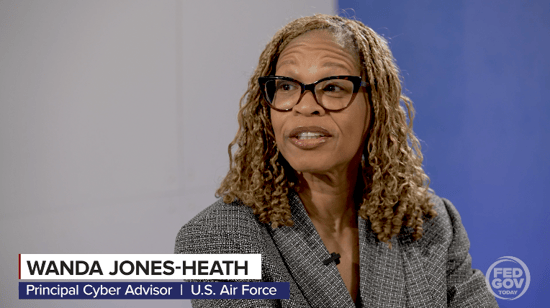 Jones-Heath was confident but measured. The Air Force is engaged, invested, and moving — but she's under no illusion that zero trust is a checkbox. Governance is in place, investments are being made across all the zero trust pillars, and senior leadership is actively engaged. DISA, she noted, has been an essential partner, providing enterprise solutions that prevent the Air Force from pursuing costly one-off implementations. The department's architecture is unique, but Jones-Heath is deliberately looking for opportunities to capitalize on enterprise solutions from sister services — avoiding redundant investment and maintaining interoperability.
Industry, she said, has delivered. Looking back at TechNet Cyber a year prior, when Randy Resnick had set ambitious timelines for zero trust solution availability, Jones-Heath was satisfied with what has come through the pipeline. The next challenge isn't getting solutions — it's integrating them. Working alongside the Air Force CTO and the Triple C functional manager at Scott, the goal is to ensure solutions are tested, integrated into the architecture, and ready to scale — with a joint purple team assessment on the horizon.
Jones-Heath was also forthright about surprises. The zero trust pillars were designed somewhat independently, but implementation has revealed significant cross-cutting dependencies that weren't fully anticipated. Adaptability has been essential, and strong senior leadership engagement has made it possible to course-correct without losing momentum. On talent, Jones-Heath described a broadened recruiting strategy — reaching into technical schools, prioritizing aptitude over degrees, and creating innovation spaces where people can experiment. Retention, she noted, is equally important — which means understanding human and cognitive behavior, not just technical skill.
Key Takeaways:
- Zero trust integration — not solution availability — is now the primary challenge; the Air Force is focused on testing, interoperating, and scaling solutions already in the pipeline.
- Strong senior leadership governance is the key adaptive mechanism when cross-pillar dependencies create unexpected complexity during zero trust implementation.
- Talent strategy must evolve beyond traditional pathways — emphasizing aptitude, AI literacy, and cognitive adaptability — while equally investing in the retention of trained personnel.