Original Broadcast Date: 09/13/2026
Sponsored by Deloitte
Federal agencies have spent years talking about modernizing human resources, but Deloitte Principal Lucy Melvin says one of the most visible parts of the federal employee experience still leaves significant room for improvement: benefits administration.
During an interview on Fed Gov Today, Melvin says benefits are particularly important because they directly affect employees while also carrying major compliance and administrative requirements for agencies.
“Benefits is such an important part of the employee experience,” Melvin says.
She explains that the issue becomes especially visible as agencies approach open season, when employees must evaluate health plans and make important decisions about their coverage. But the systems supporting those decisions are often still highly manual.
According to Melvin, many employees continue to fill out benefits documents on paper or complete PDF forms and send them through email. In other cases, employees may upload forms to an agency intranet.
Those processes create more opportunities for mistakes, missing information and delays.
When a form has an error or lacks required information, it may need to move back and forth between the employee and HR staff before the transaction can be completed. Melvin says that manual process consumes both time and resources.
She argues that the federal government has an opportunity to move toward systems designed specifically around the benefits experience.
Instead of searching for forms and determining requirements themselves, employees could enter a system and see which benefits and requirements apply to their individual situation.
That becomes particularly important because federal benefits can be complicated.
Melvin points to the more than 200 Federal Employees Health Benefits plans available to employees. Federal workers may also have to navigate retirement-related processes and provide documentation verifying whether dependents are eligible for coverage.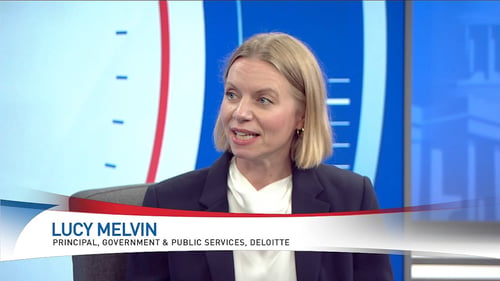
A modern benefits platform, she says, can help manage that complexity rather than simply digitizing an existing paper process.
Melvin says agencies should be careful about simply attaching benefits functionality to broader enterprise systems that were not originally designed for the federal benefits environment.
The challenge, she explains, is that a retrofitted solution may not fully account for the specific requirements agencies and employees face.
She instead points toward technology that is purpose-built for federal benefits and can use intelligent automation to guide people through the process.
That automation can also help employees catch mistakes before they become more expensive problems.
Melvin offers the example of a single employee who mistakenly enrolls in family health coverage. In that situation, the employee could pay more than necessary while the government also contributes more than it should.
Similar problems can emerge when agencies do not properly verify dependent eligibility.
Melvin cites an estimate from the Government Accountability Office that approximately $1 billion is being spent on health benefits for ineligible dependents. She uses that example to illustrate how better administration can affect both the employee experience and government costs.
For Melvin, benefits modernization is therefore not simply about making forms easier to complete.
It is also about reducing errors, helping agencies verify information, limiting unnecessary spending and giving employees a clearer path through a complicated set of choices and requirements.
That requires agencies to think carefully about the technology supporting the process.
Her advice for agency leaders is straightforward: begin evaluating solutions that are capable of meeting the specific needs of benefits modernization.
The larger opportunity she describes is to move away from processes that replicate paper-based administration electronically and toward systems built around the actual federal workforce experience.
As agencies reconsider how HR operates across government, Melvin argues that benefits should be part of that modernization conversation from the beginning.