Original Broadcast Date: 09/27/2026
Sponsored by Deloitte
Federal agencies are spending more on cloud computing and increasingly operating across multiple cloud environments, but Jason Young says simply adding more cloud does not necessarily create a better strategy.
Young, principal at Deloitte, says agencies are increasingly focused on getting greater mission value from the cloud infrastructure they already have.
The challenge becomes more complicated for organizations operating in multi-cloud environments.
Without consistent rationalization, Young says agencies can end up with duplicative workloads, security concerns and environments that become increasingly difficult to manage.
That is why he argues that “multi-cloud without rationalization is a cost problem, not a strategy.”
Artificial intelligence could help agencies address some of those challenges.
Young says AI has potential applications across multi-environment management, legacy application modernization and the orchestration of systems that previously could not communicate effectively with each other.
One of the fundamental problems is that many existing federal systems were never built to work together.
Young says exposing application programming interfaces, or APIs, becomes important in connecting those environments. AI can then sit above disparate systems as both an orchestration layer and what he describes as an “abstraction layer.”
In practice, that could change how employees interact with government technology. 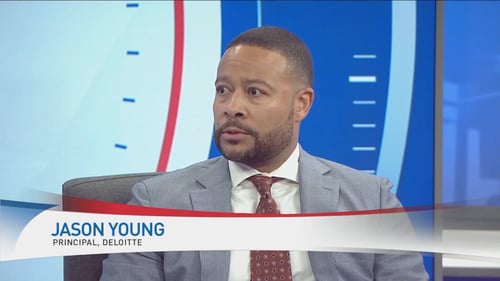
Instead of requiring a user to understand which individual applications contain specific information, an AI layer can pull information from multiple places, consolidate it and provide it to the user.
Young says that can help employees make more informed decisions at a faster pace.
The approach could also create opportunities behind the scenes.
If users interact with an AI layer rather than directly with individual applications, agencies can potentially modernize the underlying technology without creating the same level of disruption for those users.
Young says appropriately governed connections between systems could also improve security.
But connecting applications and cloud environments is only part of the modernization challenge.
Data needs to move with them.
Young says data modernization and standardization should be treated as a precondition for successful modernization rather than an activity that happens separately.
He says agencies sometimes approach data modernization independently from broader modernization and multi-cloud management.
That separation creates problems when datasets begin moving across different environments.
Agencies need to ensure that the meaning, characterization and intended use of data remain aligned as information moves from one system or environment to another. Security requirements also need to follow that information.
The more agencies move data internally and externally, the more those considerations can add complexity.
Cost remains part of the conversation, but Young says the ultimate objective is not always simply spending less.
Many agencies already have predetermined spending levels associated with their existing technology footprints. In those situations, the question becomes how to generate greater mission value from that investment.
Young points to a FinOps model as one way of thinking about that challenge.
Rather than focusing exclusively on reducing costs, agencies can examine how existing spending translates into value for customers and the mission.
For agencies trying to determine where to begin, Young recommends avoiding separate modernization strategies for applications, cloud and data.
Instead, he says organizations leading these efforts are treating modernization, multi-cloud management and data as a collective set of activities.
Bringing the three together as a portfolio creates what Young describes as greater harmony between them and gives agencies an opportunity to maximize the value of each.
That approach reflects a broader shift in the cloud conversation.
For agencies already operating across complex technology environments, the next phase is not necessarily about adding another cloud provider or another application. It is about understanding what already exists, connecting it effectively and using technologies such as AI to make the entire environment easier for employees to navigate and the agency to modernize.